On- Farm Slaughter Interview

January 14th, 2010

skinning3

Recently I was interviewed by Keith Silva, from W-CAX Channel 3 “Across The Fence”, about raising and slaughtering beef on our farm. Here is a link to the video clip:

On-Farm Slaughter Interview For W-CAX Channel 3 \”Across The Fence\”

Land’s current use law under budgetary scrutiny

January 14th, 2010

This is an Article from the Sunday Jan. 10th 2010 Barre Times Argus

The economic viability of farms and forestland is tightly tied to Vermont’s current use law and many rural businesses rely on it, including maple syrup producers, log truckers, cheese makers, fire- wood processors and equipment retailers. At left, a farmer bales hay.

Brian Mohr / Ember Photography

By JAKE BROWN Herald Correspondent - Published: January 10, 2010

Tight budgets will likely have lawmakers scrutinizing Vermont’s current use law this legislative session, with the hope of squeezing savings from it.

But there are a variety of views on whether, or even if, current use should be the target of budget-cutting scissors. The tax-equity law, created in 1978, taxes enrolled farm and forestland at its use value, and not its higher development value. It has been credited with helping Vermont retain its productive land base.

Some supporters of current use suggest there should be a moratorium on new enrollments of properties; others think lawmakers should simply leave the program alone. Still others contend that a few, targeted changes would not only save some money during these exceedingly difficult times, but also improve the law.

“Current use is a fundamental policy that underlies and helps sustain Vermont’s working landscape and rural character,” said Darby Bradley, former president of the Vermont Land Trust and current use expert. “Therefore, any changes the Legislature might consider should strengthen the law, not undermine it.”

Current use works like this: With some exceptions, owners of agricultural land and forestland of 25 acres or more can enroll in current use. If they meet certain criteria, those owners pay property taxes based on the “use” value of the land (as a cornfield or a woodlot, for example) and not on the development value of the land. In exchange for this use valuation, the farmers and forestland owners in the program agree to keep the land undeveloped and to manage it for agricultural and forestry products, forest health and wildlife interests. Today, three-quarters of Vermont’s farms are enrolled in the program and approximately one-half of Vermont’s eligible forestland is enrolled.

Vermont clearly has a unique identity that has been defined by centuries of agrarian traditions passed on from generation to generation. Current use is widely seen as having played a powerful role in maintaining and enhancing Vermont’s rural and agricultural heritage. A recent report issued by the Council on the Future of Vermont says that between 93 percent and 97 percent of Vermonters stated recently that they value the working landscape and its heritage.

Vermont’s fields and forests make up its natural infrastructure — different from roads and sewer lines, but just as essential to Vermont’s economy and way of life, said Jamey Fidel, forest program director at the Vermont Natural Resources Council. “Like built infrastructure, natural infrastructure needs long-term maintenance, and this includes keeping current use intact,” he said.

“Current use helps assure that Vermont has a local, secure food supply, lumber for construction, home heat and clean water,” Fidel said. “Current use represents smart management of our natural capital — our fields and forests — over the long term.”

On the ground at a Bethel farmstead

Carl Russell, a Bethel forestland owner and farmer, slides heavy harnesses off the broad backs of his draft horses after a day hauling red pine out of the woods. He tosses hay bales out of the loft, and they land with a thud on the snow. The horses eat, and Russell talks about current use. He sees it as a policy that should be viewed broadly, in the context of its far-reaching benefit to the land-based economy in Vermont.

“Current use helps assure a constant stream of natural resources to the land-based economy, and it’s as much an economic incentive program as a tax program,” Russell said. “It’s unfortunate that it’s been characterized as a tax break,” he said. “That’s myopic, because it is enhancing our entire natural resource-based economy.”

Russell explains that the boost from the program flows into many corners of the economy.

Russell lives on property that’s been in his family since 1938. He has a forestry degree from the University of Vermont and is on the boards of Rural Vermont and the White River Partnership. He and his family milk cows, raise their own beef and pork and sell sawlogs off the property. Russell is a part-time consulting forester and his wife is an agricultural consultant.

“Current use creates stability in the natural resource-based economy,” he said. “It creates a stability that makes Vermont what it is.”

State Rep. Alison Clarkson, a Democrat from Woodstock, is also a strong proponent of the current use program and will be working to assure if there are changes, the program’s integrity is not violated.

“Without current use, Vermont would look like New Jersey,” she said. “One of the reasons Vermont is still so beautiful is because we’ve valued our working landscape and have a tax policy, current use, to protect and promote it. Current use has a huge economic impact on us. I understand it’s about $4 billion dollars. Farm and forestland in current use produce the milk we drink, the syrup, cheese and specialty foods, renewable energy and wood products we are so proud of,” Clarkson said. “They employ a large range of people from butchers to loggers, chefs to furniture-makers — all of whom pay taxes, buy houses, live in our communities, have children in our schools and volunteer in our towns.”

Clarkson said she will be working under the Golden Dome this session to assure that any changes to the current use law due to budget constraints do not compromise its central focus and long-term integrity.

Jake Brown is the communications director for the Vermont Natural Resources Council. He lives in Montpelier and can be reached at jbrown@vnrc.org.

ON THE NET

Rural Vermont

www.ruralvermont.org/

2010 at Earthwise Farm and Forest

January 9th, 2010

During this coming year we are going to be instituting a new marketing system at our farm. Similar in some ways to a CSA, we would like to get together a list of contacts for people who are interested in receiving a list of the products that will be available during certain times.

These products could include everything from fuelwood to eggs, potatoes, raw milk, cut flowers, dried flower wreaths, and educational workshops. We will be creating a monthly list of products that will be available during the following month or two. In this way people can order ahead for those products that we would otherwise have to harvest and hold in inventory waiting for a potential customer.

As of January I can say for sure that I will be harvesting fuelwood from March through May, and I can take orders for up to 20 cords. This wood will be available at the farm, split, or in round-wood form. I am currently cutting red pine, and will be cutting white pine saw logs in February. These pine logs I am cutting for sale to mills, but if there is any interest I can take custom orders to fill while I am working in these stands. Any lumber that would be cut from these logs will not be cut until March or April.

Right now the list is short, but if this approach appeals to people then we will broaden it.

If you would like to be on our contact list, primarily e-mail at this time, please send your info to earthwise@hughes.net.

We will also have the list, schedule, and prices listed on website on our Products Page.

And feel free to tell your friends that live in the central Vermont area.

Thank you, Carl and Lisa

Beyond Milk Dairy Workshops

October 31st, 2009

Beyond Milk -Raw Dairy Processing Class

Butter, Yogurt, and Soft Cheeses

Stay tuned for 2010 Class Dates

Earthwise Farm & Forest, Bethel Vermont

Learn how to make delicious soft cheeses, yogurt and butter in your own kitchen! Get acquainted with using butter molds and adding herbs, or other flavors to your final product. With simple instruction and good quality raw milk, it an easy and exciting activity adding delicious artisinal treats for any occasion.

Sponsored by Rural Vermont, this class will also provide information about how and where to purchase local, raw milk. Attendees will get hands-on experience including an opportunity to taste-test and bring some delicious cheese and butter home.

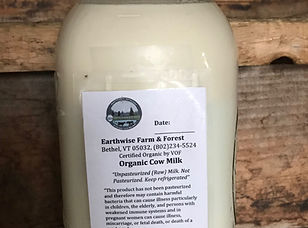
Lisa and her husband Carl Russell own and operate Earthwise Farm and Forest where they raise grass-fed livestock for meat, eggs and dairy in compliance with the organic standards. They use draft animals for logging and field work, live off the grid using wind and solar power, and sell raw milk from their farm. Lisa and Carl are on Rural Vermont’s Board of Directors and have been active members since 2000. For more information about Rural Vermont, go to www.ruralvermont.org.

Class Fee: $25 – $45 sliding scale

Pre-registration Required: Contact Lisa McCrory at 802-234-5524 or email: Lmccrory@hughes.net if you are interested in attending a future class. We will add you to our email list and contact you when our 2010 dates are set. Space is limited to 12 participants per class.

Directions:
[from Randolph] Take Rt 12 South about 3 miles and take a right onto Gilead Brook Road. Travel 2.5 miles and take a right onto Macintosh Hill Rd, go up Macintosh Hill about 2/10 of a mile and our driveway is on the left (green mailbox, #341). Drive past the red farm house another 800 feet up the driveway to our house.
[from Bethel] Take Rt 12 North about 3 miles and take a left onto Gliead Brook Road. (follow directions above after that)

Herd Health: A Prevention Preamble By Lisa McCrory, Earthwise Farm and Forest

October 31st, 2009

The only certain thing about animal diseases seemed to be man’s inability to prevent or cure most of them. It was not until I had experienced these diseases in my own herd and started at the beginning in my attempt to eliminate and prevent them, instead of accepting the diseases and treating them as inevitable, that I discovered the root cause of them. Until in fact I discovered that there is only one disease of animals and its name is man!” Newman Turner (‘Herdsmanship’, p.63)

Organic and ecological farming practices place strong emphases on preventive management strategies to maintain healthy herds and avoid costly visits from the veterinarian. Prevention starts from the soil up, building soils that are biologically active and contain a good balance of minerals and organic matter. With healthy soils in place, producers can provide high quality feed for their production animals. Meeting the nutritional needs of your livestock is only part of the equation, however. The animals will also need an environment that provides clean air, water, shelter, sunlight, freedom of movement, and pasture to graze. Healthy livestock are a reflection of a whole farm system, involving a number of elements to balance the quality life of healthy animals with commercial livestock production.
According to the National Organic Program Rule (205.239), “The producer of an organic livestock operation must establish and maintain livestock living conditions which accommodate the health and natural behavior of animals…” The rule delineates specific criteria including access to the outdoors, shade, shelter, exercise areas, fresh air, direct sunlight, clean dry bedding, and access to pasture for ruminants. All of these criteria contribute formidably to a good preventive management plan. In addition, establishing a good livestock handling system is important. Creating a team of advisors such as your veterinarian, farmer mentors, a nutritionist and other professionals to whom you can turn for information is critical. Also, work closely with your certifier and make sure that you contact him before trying a new product or implementing a new production practice.

Pasture
“Dairy cows are living, breathing, sentient creatures created to eat grass and turn it into milk…They, along with other ruminants, are here on earth to fill an extremely important ecological niche—to digest plant materials that we humans cannot,” (p.3, Karreman 2004). Well-managed pasture will provide your cows with a ration high in nutrition from a diversity of grasses, clovers and forbs. It will also provide the cow with the high forage ration she is designed to eat, with forages that are very digestible, maintaining a healthy rumen pH to support a healthy environment for the rumen microbes.
Good quality and plentiful water is important too. A dairy cow consumes from 10 to more than 30 gallons of water per day depending upon her body size, stage of lactation and the season. Water is a significant portion of a cow’s daily intake and making sure the water is clean and provided in quantities to meet the needs of your herd is critical. It is best to have water in the paddocks where the cows are grazing to allow them to focus their energy on harvesting forage. A water source located a distance from the pasture may encourage the whole herd to leave the pasture and get a drink of water at one time. This group dynamic does a few things that are not considered favorable for a healthy livestock operation: it distracts the cows from eating, keeps some cows from getting a drink, and results in concentrations of manure left around the water tub instead of where it is needed: in the pasture.
During the months outside of the growing season, your livestock should have daily access to the outdoors, sunlight, fresh air, clean, dry bedding, fresh water and protection from inclement weather. A comfortable cow is a happy cow. Make sure that your cows have opportunities to lie down and chew their cud; if she does not have a clean, dry place to do this, with adequate space, then this could put unnecessary stress on the cow.

img_4035

Cow grazing. Photo credit: Lisa McCrory, Earthwise Farm and Forest.

Know Your Cows
Good observational skills are important for an organic dairy operation. Taking the time each day to look for signs of health and signs of “dis-ease” in your herd is a worthwhile investment. This does not necessarily mean having to know the personality of each and every cow in the herd (although some producers do). It is, however, taking note of visible signs of unthriftiness or discomfort. Note healthy animals too to affirm what is working well and identifying livestock genetics within your farm system that you want to build upon.
An animal that is unthrifty may first show changes in attitude. She may be nervous or jumpy, she could be depressed, off her feed, or her water consumption may be down. Maybe she is not chewing her cud. Perhaps she isn’t laying down, or is laying down and not wanting to get up. Is she hanging out with the other cows when she is out on pasture, or is she off by herself? How does her manure look and what does her breath smell like? Signs of good health include a glossy coat, bright eyes, good body condition, good appetite, good milk production, low somatic cell count, alert disposition, and good mobility. The manure should not be too loose and shouldn’t have undigested grain in it. You can learn a lot about a cow’s health just by watching an animal in motion. So take the time to watch your animals each day; it may be the best 10 minutes you ever spent.
When entering known periods of stress such as calving, drying off, weaning, vaccinations, or significant changes to the feeding ration, it is always good to work preventatively and offer those animals nutritional supplements, probiotics, vitamin therapies, and/or kelp. Preventative measures will pay for themselves many times over when done right. Consult with your team to learn more about effective and/or organically approved methods.
A long-term health plan should be developed with the help of your veterinarian, your nutritionist, and/or your farmer mentors. This sholuld be described in your Organic System Plan (OSP), as part of your certification application and annual update. Your OSP must be reviewed and approved by your certifying agents. You also must implement a record-keeping system to track the health, production, and reproductive history of the livestock on the farm, as well as all feeds, feed additives, and health care inputs. With experience and records, every producer can gain insight into the relationship between soil health, livestock health, and a productive whole farm system.
“Natural treatments work best if a truly caring and seriously dedicated cow-conscious person is in charge of the herd. Therefore, it depends not as much on what type of farming system is in place, but more on the person who is the primary care-giver for the cows,” (Karreman 2004).
References
•    CFR Section 7, Part 205.239, National organic program regulatory text [Online]. Electronic Code of Federal Regulations. National Archives and Records Administration. Available at: http://ecfr.gpoaccess.gov/cgi/t/text/text-idx?c=ecfr&sid=5a8dc602e6a7f29… (verified 15 Jan 2009).
•    Karreman, H.J. 2004. Treating dairy cows naturally: thoughts and strategies. Paradise Publications, Paradise, PA. (Available for purchase at: http://www.acresusa.com/books/closeup.asp?prodid=1252&catid=12&pcid=2) (verified 15 Jan 2009).
•    Turner, F.N. 1952. Herdsmanship. Faber and Faber Limited, London.

Floating in Experience

August 13th, 2009

img_58631Floating in experience,
reaching through fingers upstream,
into dark cool recesses,
under roots and into bedstone crevices,
to the source,
the spring of my soul,
and with my toes, downstream,
to warm open waters of the future,
and feeling all those who have shared,
and will share, this vessel.

Earlier this summer I was repairing fence lines to get animals out on pasture. I had the boys helping me one day as we addressed one of our neighbor’s fields. As I walked around the perimeter, stretching and replacing wire, Timber took an old pair of fencing pliers and went about tapping in loose insulator nails. Bazel was more interested in cutting weeds and brush, so he took the old bayonet and used it like a machete to chop unwanted plants.

As I walked down across the field, soaking up the warm sun on my back, I listened to them each busily attending to their chores. I felt a flush of pride and a feeling of completion as I realized that I was engaged in work with my boys. They were truly contributing to my work, as if they were extensions of my own person. By having them working on portions of a project with me, it was as though I was actually performing the actions through their beings. We were all acting together as parts of a whole.

What gave me goose-bumps was when it dawned on me that they were using tools that had been around when I was their ages. I had picked those tools up from a work-bench, or a tool-box, and put my hand-prints on top of those of my father, and even those of his father.

I could feel myself drawing into my life, the experiences that were made possible for me by my father and my grandfather, and then exuding them outward into the lives of my boys. I could feel on a molecular level the connections, not only from the last, and the next, generation, but I could also feel the flowing of life, in and out, through those connections for undefined distances.

It made me recall an experience that I had in a stream twenty years ago. Prompted by something I had read from the writings of a naturalist, I had floated in the water, reaching upstream with my arms and fingers into the cool dark origins of Gilead Brook, and through my feet, downstream to the warm open waters of Long Island Sound.

On this day working in the field, I could feel this same phenomenon in my family. I could feel all of the lives that have contributed to the energetic experience that I call my own life, that period of time that I have been me. A sense of agelessness overcame me. And I could feel the immortality represented by the beings that are carrying that energy forward.

Mowing Brush With The Horses

August 12th, 2009

horses-and-mower-title

Mowing Brush with Horses at Earthwise Farm & Forest, on You Tube

This is our new DR 13hp tow behind Field and Brush Mower. It weighs about 600 pounds, very heavily built, and stable. The controls are easy to reach, and the mower can be offset so that I can watch the swath for obstacles. Because it is so heavy, when it hits something hard like a rock, or saplings, it just thumps a dull noise, rather than the clatter bang of a 3pth bush-hog. There are some projectiles that come forward but the horses are used to loud noises, and I train them to take things in stride and to listen to me, so when they do get startled, they calm down quickly when asked. All in all I am quite pleased with the machine, and by the end of this season, if I had to hire someone to do all the mowing that I have done, or will do, I would have paid for the machine outright.

Cheese Making Class

August 4th, 2009

Lisa sharing techniques and recipes for making yogurt, fromage blanc, ricotta, and butter.

Earthwise Farm and Forest Cheese Class July 2009

**BEYOND MILK! Raw Dairy Processing Class**
Butter, Yogurt, Ricotta, & Fromage Blanc
with Lisa McCrory

Sunday, August 23 / 1 – 4 pm
Earthwise Farm & Forest, Bethel, VT

Learn how to make Ricotta, Fromage Blanc, Yogurt and Butter in your own kitchen! With some simple instruction and good quality raw milk, it’s easy! Rural Vermont is partnering with some raw milk farmers and fans to bring you both. Classes will cover dairy processing basics, and will include info about how and where to purchase local, raw milk.

All classes: $20 – $40 sliding scale. Pre-registration is required, and class size is limited. Get in touch TODAY to reserve your spot!

To sign up, call Rural Vermont at (802) 223-7222 or email shelby@ruralvermont.org.

The Product is the Relationship

August 4th, 2009

Everything on our farm
is raised using a process of intention and intuition,
to validate the unseen energy of
Life’s Creative Process.

Bobsledding Logs

April 30th, 2009

bobsledsideview

It’s 4:30, quarter to five,
on a crisp mid-winter afternoon.
The sun has gone down behind the hill,
and you can see dusk forming in the shadows.

Dry powder snow covers the ground.
The temperature never got above fifteen degrees today,
but working in the sun, you warmed up easily.
Now a slight chill seeps into the dampness of sweat on your shoulders.

The team is ready,
hitched in front of a nice jag of fine straight logs.
Put your coat back on, and check for mislaid tools.
Climb up on the load, gather lines,
brace your feet, and calmly call on your animals.

As the load lurches forward,
puffs of steamy breath float from the horses’ nostrils.
You can feel the weight of the load through your legs,
as the bobsled travels over humps and through hollows.

Hooves thump and squeak,
as chips of ice fly from sharpened caulks.
From below the load comes the jingle of bridle chains,
and as the logs rasp over the frozen snow
they put forth a whine, like from a bow on a fiddle.

Feel that?… That’s the spirit in your soul dancing the bob-sledder’s jig.
” Now we’re logging”.

1998; For Walt Bryan; Farmer horse logger, family man